Blog
From Punch Cards to AI-Assisted Coding
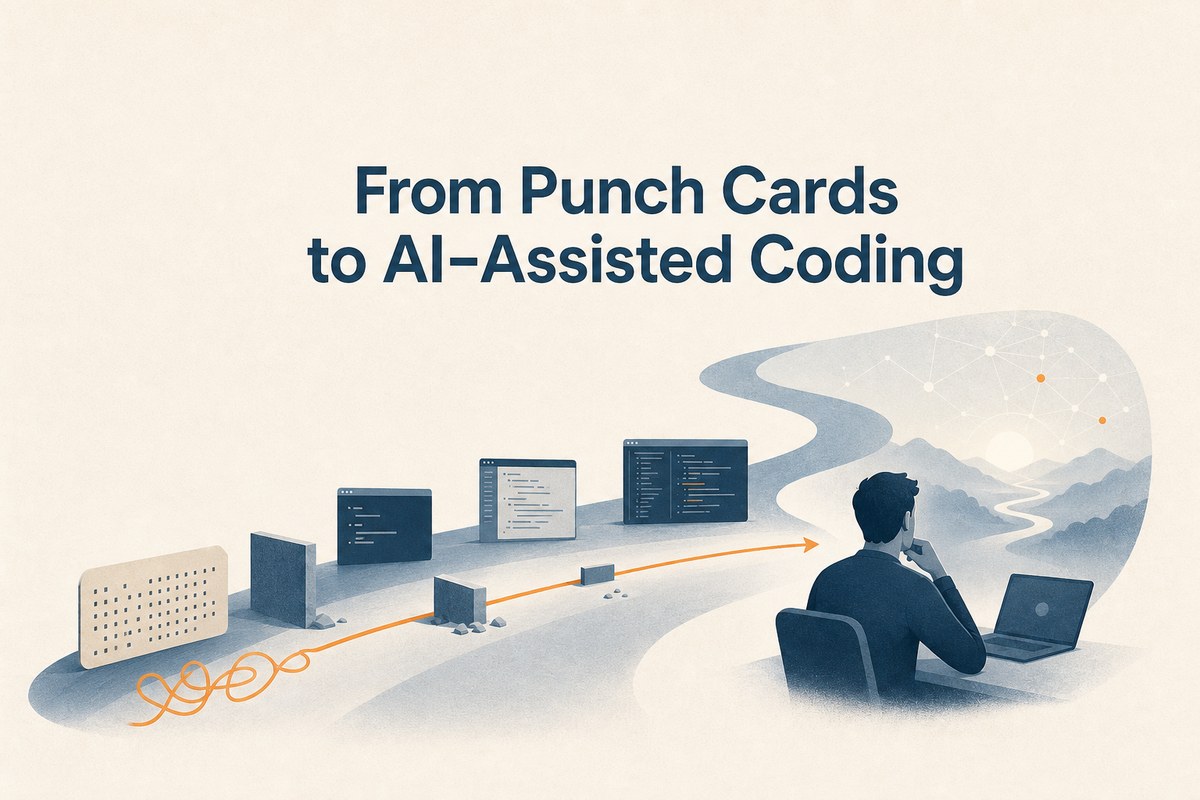
Coding keeps getting easier. That’s the point. This is how progress works.
Early on, programmers worked with punch cards and machine-level instructions. The work was slow, rigid, and unforgiving. Even small changes could take real effort, and writing software meant dealing directly with the machine’s constraints.
Then came assembly language, followed by higher-level languages like FORTRAN, COBOL, and C. That shift made a huge difference. Developers could write in ways closer to human logic and spend less time managing low-level details.
From there, the pattern continued. Structured programming made code easier to follow. Modular design made systems easier to organize. Libraries, frameworks, and open source let teams build on proven foundations rather than starting from scratch every time. IDEs, version control, automated testing, cloud platforms, and CI/CD kept removing friction.
Each step made coding faster and made it possible to build bigger, better systems with greater consistency. Teams could move faster, collaborate more easily, and spend more time solving meaningful problems.
We are now entering the next phase with AI-assisted coding.
AI can help write boilerplate, explain unfamiliar code, suggest fixes, generate tests, and speed up routine work. That is a meaningful shift, but it follows a familiar path. The tools keep making it easier to produce software and easier to move from idea to implementation.
The hard part has never been just typing code. It is understanding the problem, shaping the solution, and building something that actually works in the real world.
From punch cards to AI-assisted coding, the story has been the same: make software easier to build so people can focus more on solving real problems.
This is just the current step.
Author
More like this