Blog
A Roadmap Is Not a Plan — It's an Informed Guess With Dates
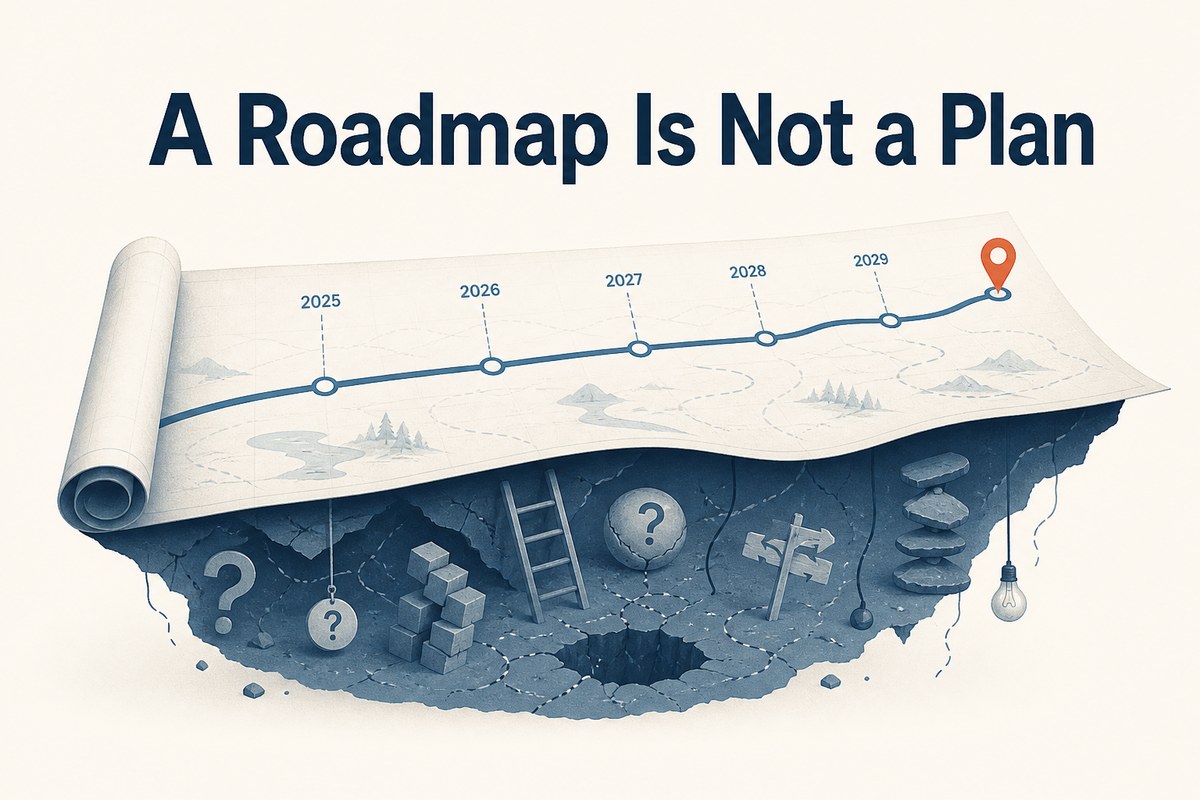
Roadmaps look precise. Milestones, sequencing, and dates suggest things are understood and under control. What they rarely show is how many of those dates depend on decisions that are not fully made yet. Scope shifts. Dependencies clarify. Teams move on assumptions that still need testing. The roadmap compresses all of that into a timeline.
Part of the confusion is where roadmaps sit. They are not strategy; strategy sets direction. They are not tactics; tactics are how the work gets done. A roadmap lives between the two — translating intent into a sequence of bets over time. That is what makes them useful. It is also what makes them fragile.
Leaders often read a roadmap as a commitment. Teams experience it as direction. When priorities shift or new information surfaces, changes get treated as execution problems. Usually, the underlying assumptions changed.
The issue is not using roadmaps. It is treating them as fixed when they are built on things still in motion. A better approach makes the uncertainty visible: name the open decisions, separate what is known from what is assumed, and keep dates conditional. The work is not only building what is on the roadmap — it is making and revisiting the decisions that determine whether the roadmap holds at all.
Originally published on Substack.
Author
More like this