Blog
Forward Deployed Engineering Existed Before the Title Did
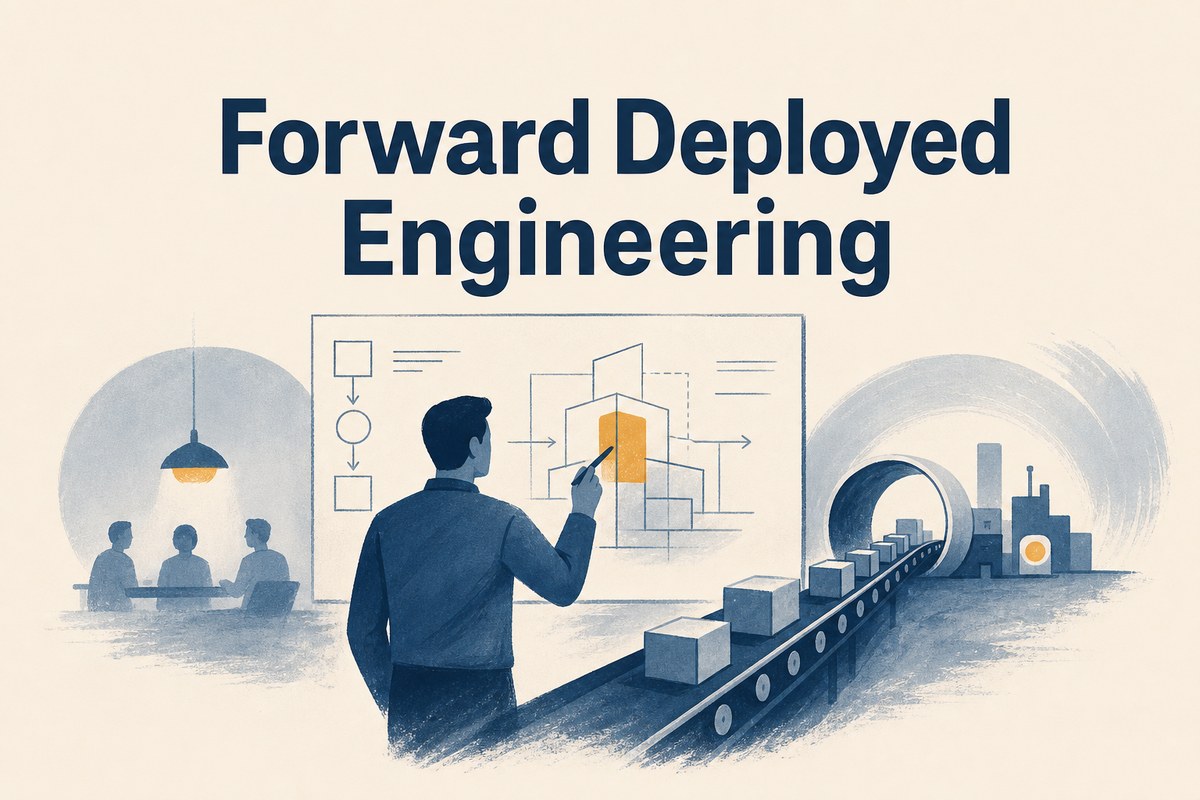
Forward Deployed Engineering has been getting a lot of attention, but the work it describes is not new. The people who created the most value in consulting and technology leadership were never sitting on the sidelines writing recommendations. They embedded with the business, worked directly with operators and executives, and stayed in the room until the solution hit production.
One hour they were discussing business priorities with leadership. The next they were reviewing architecture, validating assumptions, troubleshooting delivery issues, or helping a team work through implementation tradeoffs. They did strategy and engineering in the same week, sometimes in the same meeting, because the problems required both and the client needed someone who could move between them.
What changed is that AI made this model dramatically more productive. A single person can now prototype, validate workflows, and test assumptions faster than a team could a few years ago. Organizations want people who can move from ambiguity to execution without waiting for headcount to form around the problem, and the tooling finally supports that expectation.
That may explain why so many companies are investing in forward-deployed roles today. The title is new, but the work has been around for decades. The best technology leaders have always stayed close to the problem, close to the customer, and close to delivery.
Naming the role is a signal. Organizations are saying out loud that they need people who can think and build in the same engagement, not hand off between the two.
Originally published on Substack.
Author
More like this