Blog
AI Adoption Depends on the CTO
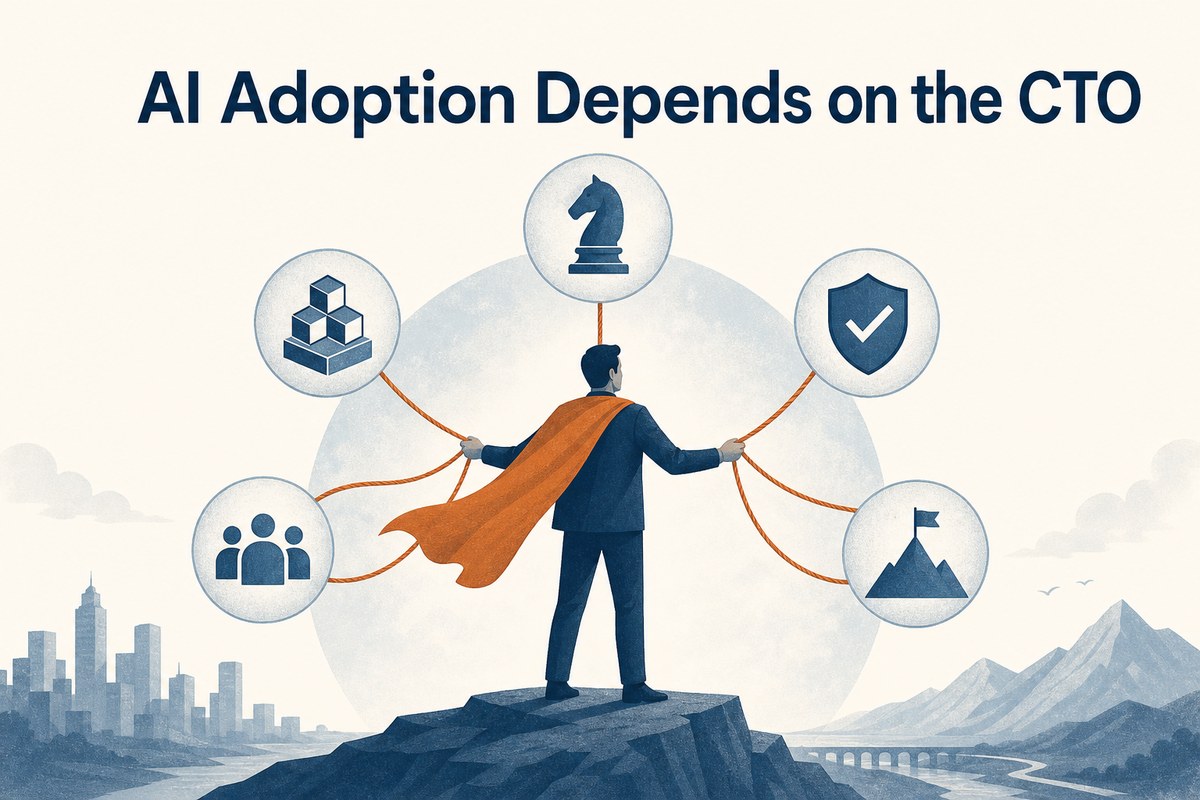
AI adoption varies based on the CTO's view and the company's growth stage.
For the technical founder, the focus is immediate and practical, prioritizing speed and visible progress over long-term considerations. Key shifts at this stage include fast AI adoption for code generation, prototyping, and internal tools. While there is awareness of second-order effects such as maintainability and stability, these concerns are secondary because small systems can be adapted later.
As the company grows, that logic breaks down. The priority shifts from rapidly shipping features to building systems that can support more teams and complexity, and the CTO's focus moves from quick decisions to system-wide consistency. AI is no longer just a tool used by individual teams; it has become a capability that has to be shared, governed, and integrated. Adoption becomes more deliberate, with an emphasis on shared data, reusable services, and guardrails, because second-order effects now carry more weight. Operational burden, inconsistent patterns, and tool sprawl all factor into the decision.
At the enterprise level, the CTO starts with the business, not just tools or platforms. The focus shifts to product, cost structure, and competitive position, with second-order effects extending to hiring, dependencies, and future options. Adoption often slows here, not from doubt but from the scale and durability of the consequences. At this stage, AI is treated as a business lever, but only when the underlying systems are strong enough to support it.
As companies scale, each decision carries further, and the CTO's role shifts from enabling speed to managing consequences. What begins as a tool becomes a capability across teams and eventually a business lever, which is why AI adoption feels simple early on but requires more intention over time as second-order effects outweigh the initial gains.
Recommended next
Related work
Agile Adoption That Actually Stuck
The Agile tooling was in place, but practices varied by team and leadership couldn't track progress. Alignment on roles and agreements came before tool configuration. That's what made it stick.
Related conversation
Nobody Who Hires You Cares About Technology
For two career technologists to say "technology is the easy part" might sound strange, but after decades in the industry, it's the most important lesson they've learned. The biggest challenges that derail projects and frustrate teams rarely have to do with code; they have to d…
Author
More like this