Blog
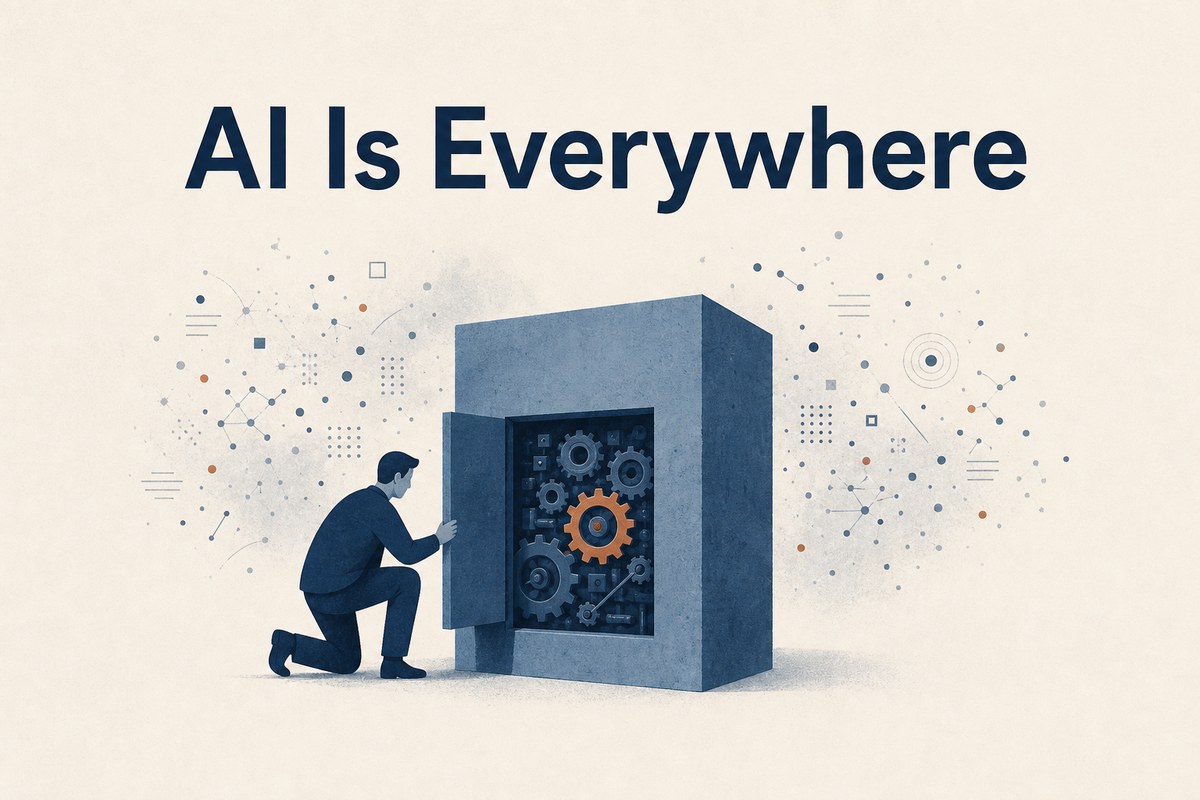
AI Is Everywhere. But It's Not What You Think
AI Is Everywhere. But It’s Not What You Think.
Everywhere you look, AI dominates the headlines. Two storylines, in particular, keep surfacing:
- The vibe-coding startup — the solo founder who hacks together something over a weekend and raises millions.
- Big Tech’s AI victory lap — companies touting headcount reductions and productivity gains from generative AI.
Those make for flashy narratives. But they’re not the whole story.
The Part You’re Not Hearing
Yes, there are moonshot experiments and some early productivity wins. But even the biggest players are taking their lumps. Do we hear about those? Not a chance. If I were Big Tech, I’d only broadcast the wins — “look how smart we are, look how we’re boosting shareholder value.” Nobody wants to admit that AI is technically hard, culturally disruptive, and still messy.
It’s not just about the LLM race among OpenAI, Anthropic, Microsoft, Google, Meta, and xAI. Go one layer deeper: Amazon and Apple still haven’t figured out Alexa or Siri after years of investment. That alone should make us pause.
The Reality Check
Here’s what’s really happening:
- Adoption is immature. No playbook. No unified ethics, regulation, or environmental framework.
- Change is hard. Tech moves faster than culture can adapt.
- The science is young. A handful of people worldwide are truly shaping it.
AI feels a bit reckless right now. It’s not ready to replace smart, experienced people — and maybe never will. I don’t see it replacing even the most “replaceable” jobs in small or mid-size companies anytime soon. And large enterprises won’t get there quickly either.
What I do see: AI being used as an excuse for workforce reductions. Not because the tech can truly replace the work, but because the narrative provides cover.
Where AI Already Works
That doesn’t mean AI is useless. Far from it. I’ve seen — and built — some amazing applications:
- Extracting critical data from medical records.
- Automating loan decisioning at scale.
- Monitoring field safety and equipment maintenance.
These are powerful results. But they work because they’re applied to focused, solvable problems with the right business context.
My Lived Experience
With decades of business and technical background, if AI could really replace jobs, I should be able to automate mine. I should be wiring up agents, MCP servers, and off-the-shelf tools to shrink my workload dramatically.
But can I? Not yet. Tools speed me up in some cases, sure. But I still lose time to rework, review, processing delays, and failed automation attempts. Ironically, I often waste time trying to save it.
The Takeaway
AI is promising. It’s exciting. It’s already delivering results in targeted ways. But it’s nowhere near the “end of jobs” moment some people claim.
Did I use ChatGPT to clean up my original stream-of-consciousness message? Yes. And it’s use cases like this that also make us think AI is farther along than it really is.
Finally, if you’re looking for a good read, check out The Singularity Is Nearer by Ray Kurzweil. It’s an exciting take on where he believes we’re headed.
Want to discuss this topic further? Connect with us on LinkedIn or reach out directly.
Author
More like this